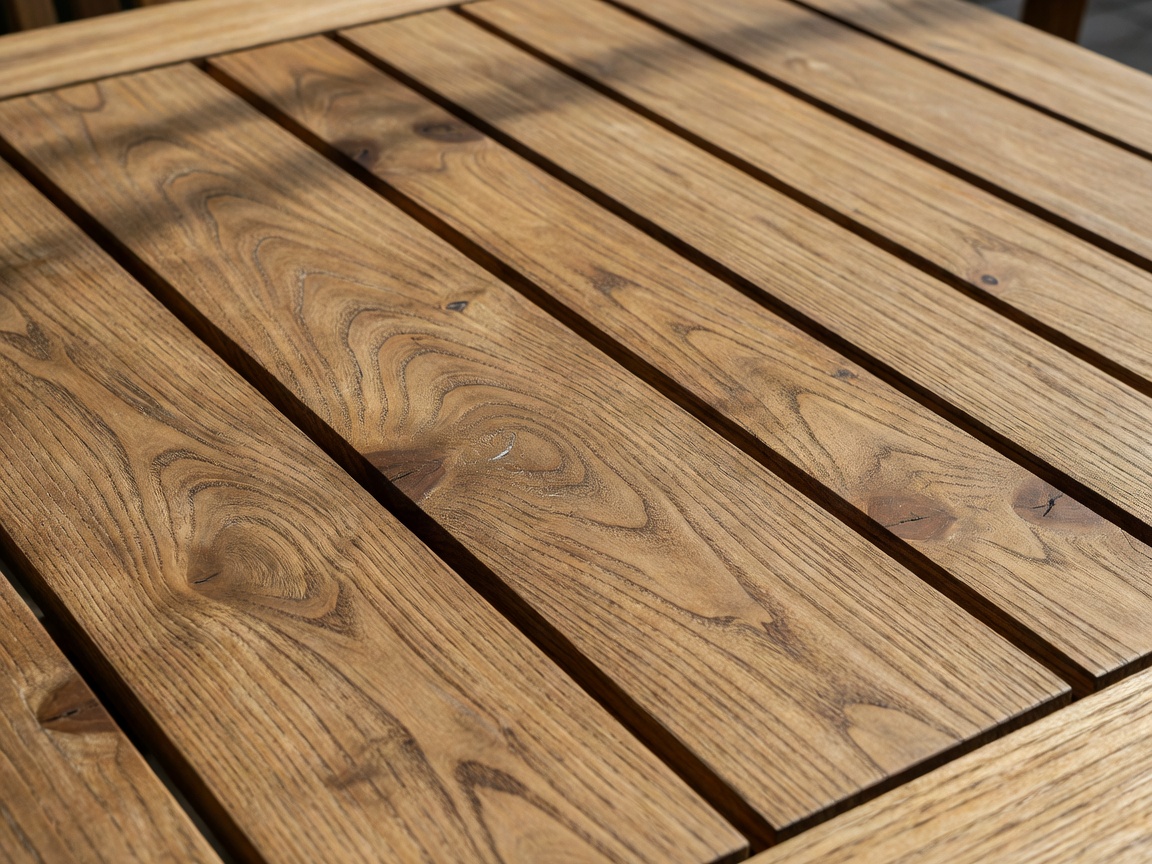
Wooden outdoor tables offer an undeniable, organic aesthetic that integrates seamlessly into natural garden environments. However, not all timber is created equal when exposed to ultraviolet light, rain, and fluctuating humidity. Selecting the right species of wood dictates whether your table will last a single season or span generations.
Teak: The Gold Standard
Teak (Tectona grandis) is universally recognized as the premier timber for outdoor furniture. Its exceptional durability stems from a naturally high concentration of rubber and natural oils locked tightly within its dense grain. This intrinsic oil content makes teak highly resistant to rot, wood-eating insects, and moisture penetration.
Pros: Unparalleled weather resistance; requires no protective sealants; highly stable with minimal warping. Over time, untreated teak transitions to a highly sought-after silvery-grey patina.
Cons: Teak commands a significant premium in the market. Due to its slow growth cycle and high demand, initial costs are substantially higher than other woods. Additionally, if you prefer the original honey-brown color, maintaining that hue requires regular sanding and application of teak protectors.
Cedar: Lightweight and Aromatic
Western Red Cedar is an excellent mid-tier option for outdoor tables. Unlike dense hardwoods, cedar is a softwood, which means it contains microscopic air pockets that act as insulation. This cellular structure prevents the wood from becoming uncomfortably hot in direct sunlight.
Pros: Contains natural tannins that resist decay and repel insects; much lighter to move than teak; generally more affordable; takes stains and paints exceptionally well.
Cons: As a softer wood, cedar is prone to denting and scratching. A dropped heavy serving bowl or a sharp edge will leave a lasting mark. It also requires more frequent maintenance; to prevent it from degrading into a dark, weathered grey, annual sealing with an outdoor UV-resistant finish is highly recommended.
Acacia: The Budget-Friendly Hardwood
Acacia has surged in popularity as a highly renewable, fast-growing hardwood that offers a beautiful, swirling grain pattern. It provides excellent density and a robust structure at a fraction of the cost of teak.
Pros: Excellent value for money; very hard and scratch-resistant; visually striking natural grain.
Cons: Acacia lacks the dense natural oil content of teak. If placed directly on wet grass or exposed to constant rain without protection, it will eventually succumb to rot and mold. Acacia tables must be kept sealed or painted, and they perform best under covered patios or when stored during harsh winter months.
Key Construction Details to Look For
Regardless of the wood species you select, structural integrity often comes down to joinery. When evaluating a wooden outdoor table, look closely at how the pieces fit together:
- Mortise and Tenon Joinery: This traditional method interlocks the wood, creating a massive amount of surface area for glue. It is far superior to basic butt joints.
- Hardware: Any screws or bolts used in the assembly must be stainless steel or brass. Galvanized screws will eventually rust, staining the wood and compromising the joint.
- Slatted Tops: Outdoor wooden tables should ideally feature a slatted design. Solid slab tables will pool water on the surface, accelerating water damage. Slats allow rainwater to drain freely and accommodate the natural expansion and contraction of the timber.
Investing in a wooden outdoor table is a long-term commitment. By understanding the inherent properties of teak, cedar, and acacia, you can align your budget with your willingness to perform annual maintenance, ensuring your outdoor space remains welcoming for years.