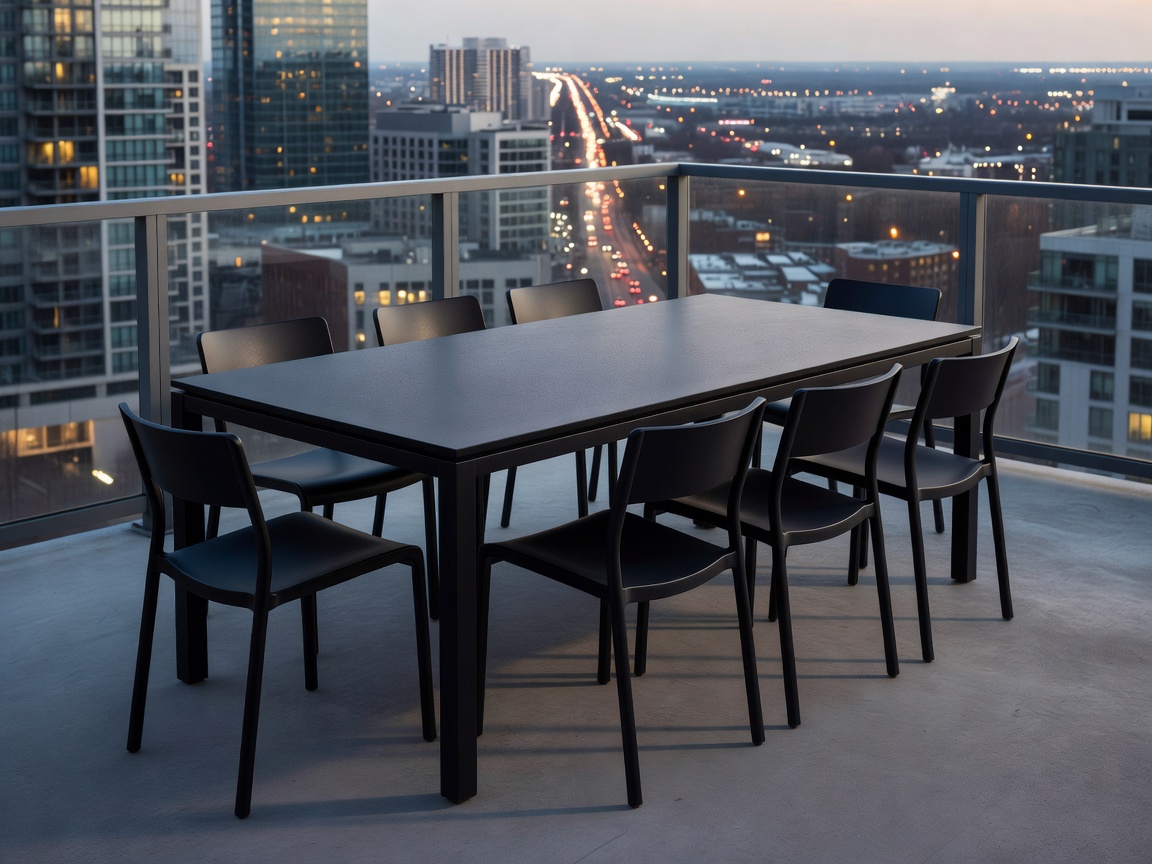
Metal patio tables offer modern, clean lines, structural rigidity, and a low-maintenance profile that appeals to many homeowners. However, categorizing all "metal" tables together is a mistake. The base material dictates how the table will react to moisture, salty coastal air, and intense sunlight. Understanding these metallurgical differences is key to preventing an unsightly, rust-covered patio in just a few seasons.
Cast and Extruded Aluminum
Aluminum is widely considered the most versatile material for outdoor furniture. Extruded aluminum is hollow and exceptionally light, while cast aluminum is poured into molds, resulting in solid, heavier pieces with intricate detailing.
Pros: The greatest advantage of aluminum is that it physically cannot rust (it does not contain iron). If exposed to the elements, it undergoes oxidation, forming a microscopic chalky layer that actually protects the metal beneath. Modern aluminum tables are usually powder-coated, offering a durable, baked-on color finish. They are also lightweight, making rearrangement easy.
Cons: Because it is lightweight, extruded aluminum tables can blow over in high wind areas unless weighted down. In extreme direct sunlight, dark-colored aluminum will absorb heat rapidly.
Wrought Iron and Cast Iron
Iron furniture is the traditional heavyweight champion of the garden. True wrought iron is hand-forged, offering incredible artisan detail, though many modern pieces are machine-made or cast.
Pros: Iron is virtually indestructible under normal use. Its substantial weight guarantees that it will never be displaced by strong winds. It offers a classic, timeless aesthetic that is perfect for traditional garden settings.
Cons: Iron's natural enemy is moisture. Without a pristine, uncompromised protective coating, iron will rust quickly. Even a minor scratch that exposes the bare metal will begin oxidizing in a matter of days. Iron also demands periodic maintenance, requiring touch-up paint at the first sign of chipping. Moving an iron table usually requires two people.
Stainless and Galvanized Steel
Steel offers a middle ground between the lightness of aluminum and the weight of iron. It is inherently stronger than aluminum, allowing for thinner, sleeker structural designs.
Pros: High tensile strength permits minimalist, modern designs that can support heavy loads (such as thick stone or glass tops). Galvanized steel is coated in zinc to resist rust, while stainless steel contains chromium to prevent corrosion naturally.
Cons: Despite its name, stainless steel is not entirely stain-proof; in salty coastal environments, lower grades of stainless steel (like 304) can develop surface pitting or "tea staining." Marine-grade 316 stainless steel is required for oceanfront properties, driving up the cost significantly. Powder-coated carbon steel, if chipped, will rust similar to iron.
The Importance of Powder Coating
When shopping for any metal table, check the finishing process. Standard liquid paint sits on the surface and easily chips. Powder coating involves applying a dry colored powder electrostatically, then curing it under heat. This creates a hard, continuous shell that is vastly superior at preventing moisture from reaching the metal substrate.
By assessing your local climate—especially regarding humidity, proximity to saltwater, and high winds—you can select a metal patio table that balances structural needs with long-term weather resistance.